Vageesh Express


Deity of the

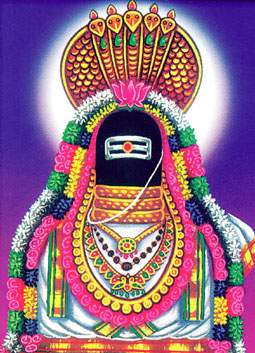
This is the last of the articles under the title ‘Deity of the
Siva is also a study in contrasts.
He has long matted hair (Jata)
How it is possible to be a study in contrast? Siva encompasses everything; therefore, all contrasts lie within Him. Devotees see what they want to see in him according to their spiritual development. When we grow spiritually, we see that Siva is everywhere and He created everything. Then we begin to love everyone and everything as Siva. Satya Saibaba also stresses the same by his famous words, ‘Love all, and serve all’. Jesus also stresses love and forgiveness in his preaching. In a way, all beings in higher plane of spirituality conclude that Siva is love in whatever way they name Siva. Saint Manickavasagar also praises Siva in the same spirit that ‘let us praise the one who does not have even one name with a thousand names”.
Many wise men tried to define who Siva is. Saint Manickavasagar defines him in his ‘Siva Puranam’ as ‘you do not have a beginning, any measurement, and end.’ Why is Siva considered eternal? If Brahma, the creator has a beginning (birth), and an end, then somebody else created Brahma. Hence, there is a higher or supreme soul (paramathma) than Brahma. Hence, any soul that has a beginning and end cannot be a supreme god. He is the creator of Vedas from which all creation started. Therefore, Siva can have no beginning or end which makes him eternal.
We all evolve and reach a higher plane of existence. We start life as a helpless child and evolve ourselves to youth, middle-aged person and old person. The same way life needs to evolve going through the cycle of birth and death until we mature enough to merge or become one with Siva. Until that time, we can ask him anything and everything to attain spiritual growth. He is the most generous giver of boons. Devas, Asuras, Rakshasas and humans have obtained boons from Siva. For example, Ravana obtained such boons from Siva that every deva served him until Rama annihilated him. Lord Rama prayed to Siva to remove his Brahmahathi dosha of killing Ravana. Arjuna even fought with Siva (in the form of a hunter) to obtain pashupathastra to win the Mahabharata war. Chamakam in Sri Rudram describes what we can ask from Siva.
Siva has temples from
Let us worship Siva and pray that this be our last birth and we merge
and become one with him and be released from the cycle of birth and death.
Submit feedback to newsletter@mahaganapati.org with subject line as <Deity Of The Month> Disclaimer: Views of readers/column
writers are that of their own and not of the 
