Vageesh Express


Recipe Corner

Vageesh Express
Recipe Corner
Let us be together,
Let us eat together,
Let us be vital together,
Let us be radiating truth, radiating the light of life,
Never shall we denounce anyone, never entertain negativity.
-The Upanishad

Indian cuisine is As Diverse as Its Civilization.
The
finest of India's cuisines is as rich and diverse as its civilization. It is an
art form that has been passed on through generations purely by word of mouth,
from guru (teacher) to vidhyarthi (pupil) or from mother to
daughter. The range assumes astonishing proportions when one takes into account
regional variations. Very often the taste, color, texture and appearance of the
same delicacy changes from state to state.
The
hospitality of the Indians is legendary. In Sanskrit Literature the three
famous words 'Atithi Devo Bhava' or
'the guest is truly your god' are a dictum of hospitality in India. Indians
believe that they are honored if they share their mealtimes with guests. Even
the poorest look forward to guests and are willing to share their meager food
with guest. And of particular importance is the Indian woman's pride that she
will not let a guest go away unfed or unhappy from her home. Indians are known
for their incredible ability to serve food to their guests - invited or
uninvited. Food customarily forms the crowning part of most festivities and
celebrations. Whatever the occasion Indians eat with great gusto and are adept
at finding reasons to feast and make merry. At traditional and festive meals,
the thali (plate) or banana leaf is
decorated with rangoli (a design
drawn with white and colored powders around the edges).
One
can eat a different Indian dish everyday, but still not repeat it for an entire
year! The food of India offers a staggering range of dishes to the gourmet with
an adventurous palate. Essentially spicy, the cuisine is, however, not always
hot. It is the different combination of a handful of spices that produce the
most delectable dishes in the world. In India, preparation of food is an art,
perfected over time and passed through generation by just word of mouth.
The
new year celebration is all around India during April – each state has it’s
unique combination if recipes and let’s try one from Andhra (South East India)
and one from (East India) as Ugadi is
just around the corner and so is - Vishuva
Sankranti. So, its mango time and Turumu Pacchadi one of the festive
recipe in Andhra and can prepare in advance for festival day meal on Ugadi.
Very easy, a delight to the senses. Try yet another tasty dish - Dalma a popular Oriya comfort food, and
prepared with dhal-vegetable combination. In dalma, the demure dhal becomes
dashing, due to a special spice-mix called Panch
Pohrana.
Mango Turumu Pacchadi
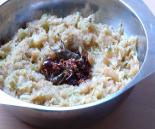
Ingredients:
1 - Green, Unripe Mango:
1 Tsp - Methi seeds
1 Tsp – Mustard seeds
½ Tsp – Urad Dahl
Few Dry Red Chilies
Pinch of HIng
Oil to sauté
Salt to taste
Method:
· Wash and lightly peel and remove the skin. Using a grater, grate the mango until you reach the seed on all sides. Mango gratings came about two cups.
· Meanwhile make the Methi - Mustard Seasoning: Heat a cast-iron skillet. Add and dry-roast without oil; methi seeds and mustard seeds to two minutes, few dried red chilies to pale brown.
· Take them all in a mixer or spice grinder. Add half-teaspoon salt. Grind to fine powder.
· Popu or Tadka: In a tiny pan, heat a teaspoon of oil. When oil is hot, add and toast in this order, constantly stirring:
· Take half-inch pieces of dried red chilies (spicy per taste) to pale brown, few curry leaves to golden, urad dhal to red color
· Add a pinch each - cumin and mustard seeds, when seeds start to pop, add a pinch of asafetida hing
· Putting Together the Mango Turumu Pacchadi: Take mango gratings in a vessel. Add the methi-mustard seasoning. Combine well.
· Add the toasted Tadka ingredients to the mango gratings. Mix thoroughly. Store the pacchadi in a clean jar.
· Stays fresh for two to three days upto a week, no need to refrigerate. Just don’t use wet spoons.
·
Mango turumu
pacchadi tastes wonderful when mixed and eaten with rice and dhal or sambar
Dalma
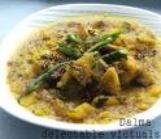
Ingredients:
3/4 cup - Toor Dahl and Chenna Dahl
150 gm - Pumpkin cut into large pieces
2 cups - Brinjal, large and cut into medium size
pieces
1 pc - Banana green and cut into medium size pieces
1 pc - Papaya, small and cut into medium size
pieces
1 pc - Potato, peeled and cut into large pieces
2 Tsp - Coconut, grated
1 Tsp each panch pohrana (Cumin, Mustard, Fennel,
Fenugreek, Kala Jeera - can be made as powder too)
4-5 - Red Chilies, dried
1 Tbsp - Ginger, minced
1 Tsp - Turmeric
2 Tsp - Cumin, fried
½ Tsp - Sugar
Oil to sauté
Salt per taste
Method:
· Dry roast 1 tsp of cumin and red chili in a pan. Grind it properly and leave it aside.
· Boil 4 cups of water and add dals (toor and chana), coconut, salt, minced ginger, turmeric and sugar and leave it until Dahl is half cooked.
· Add all vegetables viz. potato, banana, pumpkin, brinjal and papaya and cook until vegetables become soft and tender.
· Fry the panch-pohran until it crackle and then add it to the cooked dhal –a salt and sugar.
· Sprinkle roasted cumin and decorate with coriander leaves (optional).
Serve with hot steam rice.
Enjoy the recipes! Keep it simple! Keep it
Authentic! Keep it Indian!
Submit feedback to newsletter@mahaganapati.org with subject line as <Recipe> Disclaimer: Views of readers/column writers are that
of their own and not of the Temple

