Vageesh Express


August 2006 Edition
Temple Tour


Hindu Temples in the United
States
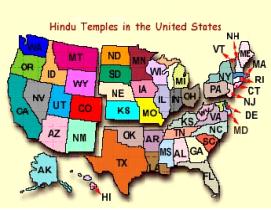
India is a land of artistic and wonderful temples. Hindu Temples have not only been great abodes for worship but landmarks of architecture of the Indian sub-continent.
Indians who have settled in the United States look for the same peaceful abodes to pray and worship the many gods and goddesses. The religious landscape of the southeastern United States is becoming more diverse, as is the population. Along with the “church on every corner,” Hindu temples, Buddhist centers, mosques, and other religious centers contribute to the communities of this region.
We have
to applaud the work of the many Indians who have come together to build these
temples and places of worship for the Indian population. Some of the
architectural marvels that have sprung from this hard work will make one feel
as if visiting a temple in India.
Many temples are open daily for worship (morning and/or evening), often with longer hours on the weekends. Some have hired one or more full-time priests, while volunteers lead the rituals in other temples. Hindu festivals and holy days are celebrated at these temples with special rituals, food, cultural events, and socializing. Most of the temples also have the infrastructure for social and cultural events.
The purpose of this segment is to focus and familiarize the significance of each these temples.

Click here: http://maps.google.com/maps?q=51933+W+Teel+Rd+Maricopa+AZ+85239%20(Maha%20Ganapati%20Temple%20of%20Arizona)
Temple Hours:
|
Saturday 11:00 am – 5:00 pm Sunday 10:00
am - 5:00 pm Weekdays Per
volunteer schedule |
History of the Temple:
In
May 1999, Satguru Sivaya Subramuniyaswami of Kaui Asdheenam gifted a 1400 l.,
4ft. tall granite Ganesha Murti to the Hindu community of Arizona for the
construction of a mainstream, Hindu temple for all denominations and sects. The
Vighraha gifted to Arizona was carved in India. The temple was officially
incorporated as Arizona Non - Profit Corporation in March 20, 2000.
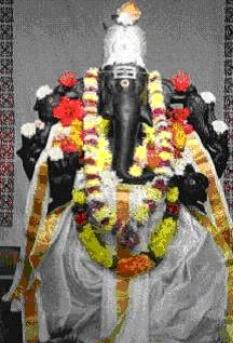
The
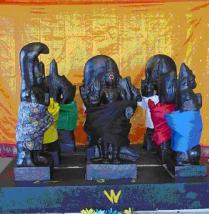
temple houses the Vigraha of Lord Maha Ganapati, Siva Linga and Navagraha
Shrine. The Navagraha Shrine is the first of its kind in Arizona. In addition,
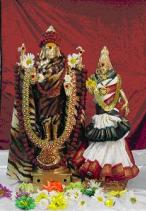
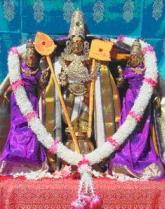
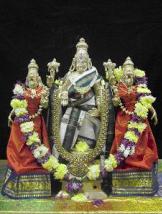
the temple also has Utsava murtis of Lord Maha Ganapati, Lord Siva and Parvati,
Lord Subramanya and his consorts, and Lord Srinivasa and his consorts.
Architecture of the Temple:
Plans
are underway for a multi-phase Permanent Structure Construction that follows
the Agama and Vasthu Shastras (temple science/architecture). The Temple’s
design will follow the Chola Dynasty (10th Century) style of South Indian
architecture. The different stages of construction are as follows:
Phase I: This Phase involves the construction of 7,600 square feet main temple,
200 parking spaces, and roadways. The temple will house the deities of Lord
Maha Ganapati, Lord Siva, Goddesses Parvathi, Lord Venkateshwara, Goddess
Lakshmi, and Lord Subrahmanya, in separate sanctum sanctorum. The Maha Mandapa
will have an approximate capacity to seat 500 people. This phase may take
twenty months for completion. This phase of construction will include
Indianization of all the interior elements (Garbagrahas) and is estimated to
cost approximately Eight Hundred thousand U.S Dollars.
Phase II: This would enhance the features of the temple with the
addition of a 50-foot Raja Gopuram, Vimanas for the various deities, and
Indianization of the exterior wall. This is expected to take an additional
twelve months of construction and an additional estimated cost of about three
hundred thousand dollars.
Master Plan: Initial drafts on a master plan for the fifteen-acre
temple complex are underway. This includes provisions for future expansion of
the temple, cultural hall and cafeteria, residence for the priests, play area
for children, guest apartments, library, additional parking space and gift
shop.
Architects: Several Sthapathis (traditional Indian Temple architect)
were considered for the design of the project. From among them, the members of
the temples Board of Directors approved the construction proposal submitted by
Padmasri Sri Muthiah Sthapathi. The schematic drawings from Sri Muthiah
Sthapathi will be translated into construction drawings by a team of local
architects, headed by Naveen Pathangay. A local construction company will then
construct the temple structure. A team of Shilpis (sculptors from India) under
the directions of the Sthapathi will work on Indianization of the structure
(i.e. converting the masonry structure into an ornately sculptured and
architecturally attractive traditional Hindu temple).
With
the blessings of Lord Maha Ganapati, the Temple is rapidly expanding in serving
the needs of the Arizona community. The tremendous commitment and dedication of
the many volunteers is unmatched. The temple prides itself on being an entirely
volunteer driven organization. Except for the temple priest, all the operations
of the temple are performed by volunteers.
Moving forward at this rapid pace, there is an even greater need for
more help to step up and get involved in serving the Temple.
Services Offered:
In
addition to regularly scheduled pujas, the temple conducts special pujas during
the weekends. These include, Subramnaya Puja, Siva Puja, Navagraha Homa,
Ganapati Homa, Hanuman Puja and Satyanarayana Puja. The temple also provides
religious services to the Hindu community in the Phoenix and surrounding areas
of Tucson and Casa Grande through at home services like Griha Pravesa Puja,
Ayushya Homa etc.
For more information
please visit the temple’s website: http://www.mahaganapati.org

|| Hari OM ||
Submit feedback to newsletter@mahaganapati.org with subject line as <Temple Tour> Disclaimer: Views of readers/column writers are that
of their own and not of the Temple
