
Let us be together,
Let us eat together,
Let us be vital together,
Let us be radiating truth, radiating the light of life,
Never shall we denounce anyone, never entertain negativity.
-The Upanishad

Indian cuisine
is As Diverse as Its Civilization
The
finest of India's cuisines is as rich and diverse as its civilization. It is an
art form that has been passed on through generations purely by word of mouth,
from guru (teacher) to vidhyarthi (pupil) or from mother to
daughter. The range assumes astonishing proportions when one takes into account
regional variations. Very often the taste, color, texture and appearance of the
same delicacy changes from state to state.
The
hospitality of the Indians is legendary. In Sanskrit Literature the three
famous words 'Atithi Devo Bhava' or
'the guest is truly your god' are a dictum of hospitality in India. Indians
believe that they are honored if they share their mealtimes with guests. Even
the poorest look forward to guests and are willing to share their meager food
with guest. And of particular importance is the Indian woman's pride that she
will not let a guest go away unfed or unhappy from her home. Indians are known
for their incredible ability to serve food to their guests - invited or
uninvited. Food customarily forms the crowning part of most festivities and
celebrations. Whatever the occasion Indians eat with great gusto and are adept
at finding reasons to feast and make merry. At traditional and festive meals,
the thali (plate) or banana leaf is decorated
with rangoli (a design drawn with
white and colored powders around the edges).
One
can eat a different Indian dish everyday, but still not repeat it for an entire
year! The food of India offers a staggering range of dishes to the gourmet with
an adventurous palate. Essentially spicy, the cuisine is, however, not always
hot. It is the different combination of a handful of spices that produce the
most delectable dishes in the world. In India, preparation of food is an art,
perfected over time and passed through generation by just word of mouth.
Our
culinary traditions have been handed down generations orally, from mother to
daughter. Fragments of memory and little modifications along the way, but at
best we have a comprehensive culinary record of what - the last two hundred
years? It is our ability to transform whatever is at hand into something that
our heart immediately knows is ours - 'Indian',
if you want to call it that is perhaps the cornerstone of all Indian cooking;
something that unites all Indian states and regions. This month’s recipe is Sweet Corn/Makki Sabji. Enjoy this
authentic corn recipe “Sweet Corn/Makki
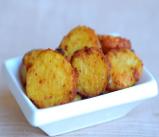
Sabji” together with “Arvi Chips”. These
oven baked Arvi fry make a satisfying and nutritious side dish when
served with rice and dal/sambar/rasam or yogurt combination. Moreover, it is
the ideal dish for these cool winter days
Sweet Corn/Makki
Sabji
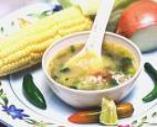
Ingredients:
1 Cup – Frozen sweet corn kernels, crushed coarsely by pestle or in blender.
1 - Small green/red bell pepper chopped into small cubes
1 Tsp - Red chilli powder
½ Tsp - Coriander seed (dhania)
powder
¼ Tsp - Turmeric powder
¼ Tsp - Garam masala powder
1-2 Pinches - Asafetida
½ Tsp each - Cumin & Mustard
seeds
½ Tsp Fresh root ginger, grated
3 Tbsp – Cooking oil
Few Curry leaves
Salt to taste
For
Garnish
Garnish with few chopped coriander leaves and lemon
juice
Method:
· Heat oil in a pan, add mustard and cumin seeds, curry leaves, asafetida and let mustard seeds pop and the cumin seeds to brown.
· Add the bell pepper and stir fry for a few minutes.
· Add all dry powders, except garam masala, stir again, remove from heat and keep aside.
· In same pan heat oil, add some cumin seeds, ginger and add crushed corn. Add water, bring to a boil.
· Add the bell pepper mixture, stir and simmer covered, on low for 7-8 minutes, till liquid thickens a little.
· Add salt and little more water if needed to adjust he consistency, add garam masala and stir for few minutes.
· Garnish with chopped coriander.
· Serve hot with phulkas or parartas or steamed rice, etc.
Arvi Chips
Ingredients:
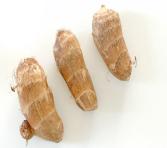
4-5 Medium size Arvi (Taro roots/ Colocasia)
2-3 Tbsp – Oil/Butter
1 Tsp – Red chili powder
1 Tsp – Turmeric power
Salt per taste
Method:
·
Boil (or steam cook) arvi in water until they become tender.
·
Overboiling makes them extremely mushy so check frequently and
remove them promptly.
·
When they are cooled enough to touch, peel the skins. Cut
each, crosswise about quarter to half-inch thickness.
·
In a vessel, take few teaspoons of oil. Mix salt, red chilli
powder and turmeric.
·
Toss the cut arvi in this seasoning mixture and spread them
in rows neatly on a foil covered baking tray and
bake
them at 350 F for about 10 minutes.
·
Finally, broil each side for about 2 to 5 minutes, until
they are golden-brown. Remove and serve hot.
·
While boiling and baking, pay attention to the time and the
cooking process.
·
The recipe could be tried with sweet potato as well
Enjoy the recipes! Keep it simple!Kep it Authentic! Keep it
Indian!
 Kitchen
Tip – Arvi
- It should be firm and feel heavy. Small round taro is originally from
Asia. When it is larger and longer it is called West Indian dasheen. Keep them dry n a cool
dark place. It will keep more than a week in the refrigerator crisper. Freeze
after first blanching for 5 minutes. Eating raw Arvi is toxic. If you buy fresh
corn - pick up each ear and look for ears that feel full and plumb in your
hand. Take a look at the silk sticking out at the top; it should be golden
pale, slightly sticky. Try popping one of the kernels with your thumbnail and
if the juice from the kernel the fresher the corn.
Kitchen
Tip – Arvi
- It should be firm and feel heavy. Small round taro is originally from
Asia. When it is larger and longer it is called West Indian dasheen. Keep them dry n a cool
dark place. It will keep more than a week in the refrigerator crisper. Freeze
after first blanching for 5 minutes. Eating raw Arvi is toxic. If you buy fresh
corn - pick up each ear and look for ears that feel full and plumb in your
hand. Take a look at the silk sticking out at the top; it should be golden
pale, slightly sticky. Try popping one of the kernels with your thumbnail and
if the juice from the kernel the fresher the corn.
Submit feedback to newsletter@mahaganapati.org with subject line as <Recipe> Disclaimer: Views of readers/column writers are that
of their own and not of the Temple

