Vageesh Express



Recipe Of The Month
Vageesh Express
Recipe Of The Month
Let us be together,
Let us eat together,
Let us be vital together,
Let us be radiating truth, radiating the light of life,
Never shall we denounce anyone, never entertain negativity.
-The Upanishad

Indian cuisine
is As Diverse as Its Civilization
The
finest of India's cuisines is as rich and diverse as its civilization. It is an
art form that has been passed on through generations purely by word of mouth,
from guru (teacher) to vidhyarthi (pupil) or from mother to
daughter. The range assumes astonishing proportions when one takes into account
regional variations. Very often the taste, color, texture and appearance of the
same delicacy changes from state to state.
The
hospitality of the Indians is legendary. In Sanskrit Literature the three
famous words 'Atithi Devo Bhava' or
'the guest is truly your god' are a dictum of hospitality in India. Indians
believe that they are honored if they share their mealtimes with guests. Even
the poorest look forward to guests and are willing to share their meager food
with guest. And of particular importance is the Indian woman's pride that she
will not let a guest go away unfed or unhappy from her home. Indians are known
for their incredible ability to serve food to their guests - invited or
uninvited. Food customarily forms the crowning part of most festivities and
celebrations. Whatever the occasion Indians eat with great gusto and are adept
at finding reasons to feast and make merry. At traditional and festive meals,
the thali (plate) or banana leaf is
decorated with rangoli (a design
drawn with white and colored powders around the edges).
One
can eat a different Indian dish everyday, but still not repeat it for an entire
year! The food of India offers a staggering range of dishes to the gourmet with
an adventurous palate. Essentially spicy, the cuisine is, however, not always
hot. It is the different combination of a handful of spices that produce the
most delectable dishes in the world. In India, preparation of food is an art,
perfected over time and passed through generation by just word of mouth.
Our
culinary traditions have been handed down generations orally, from mother to
daughter. Fragments of memory and little modifications along the way, but at
best we have a comprehensive culinary record of what - the last two hundred
years? It is our ability to transform whatever is at hand into something that
our heart immediately knows is ours - ' Indian',
if you want to call it that is perhaps the cornerstone of all Indian cooking;
something that unites all Indian states and regions. This month’s recipe is an
authentic Gujarati recipe. It is
traditionally made for Makarsankranti
or Kite flying day using young wheat
berries from the famous Bhal wheat
growing region of Gujarat. Enjoy the heart warming “Kichado
– Wheat Berries and dal porridge”
together with “Rasmalai”.
Kichado - Wheat Berry and Dal Porridge
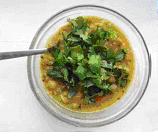
Ingredients:
1 Cup - Spring wheat berries ( available at local organic shops/regualar
grocers)
½ Cup - Toor dal
½ Cup - Raw peanuts
2 - Dried dates or Fresh Dates
Pinch of Haldi/ Turmeric
½ Tsp - Red Chili powder
¼
Cup Fresh grated coconut
2-3 Tbsp Ghee or any cooking oil
Salt to taste
For
Seasoning
1 Tbsp – Ginger grated or chopped finely
1-2 Cut Green Chillis
½ Tsp Ajwain
4 Cloves
2 inch Cinnamon
Sugar (optional)
For
Garnish
Chopped coriander leaves.
Method:
· Soak the wheat berries in warm water overnight or for six hours minimum.
· Boil in a pressure cooker with some extra water.
· Either blend in a food grinder or pound with a potato masher to make the wheat berries less chewy.
· Cook the toor dal with the fresh dates, a pinch of salt, the handful of peanuts, and the coconut.
· In a pan heat ghee/oil as required and add the seasonings in the following order - Ajwain, Cloves & Cinnamon, Ginger and finally green chilles.
· Combine the wheat berries, toor dal. Add pinch turmeric, red chili – bring to a quick boil. Add seasoning and serve.
· Traditionally Khichado is served with finely diced cucumber and onion as a meal in itself.
Rasmalai with a twist

Instead
of preparing from scratch, this delicious recipe can be made easily. Follow the
recipe!
Ingredients:
1
Tin - Rasagulla (8-10 pieces)
1
Quart – Milk
½
Cup – Sugar
½
Cup - Chopped pistachios & walnuts (substitute walnuts with almonds &
cashews)
½
Tsp - Cardamom powder
1
Tsp – Rose water
Method:
·
Pour the milk in a deep and wide pan (not non-stick) and
bring to a boil.
·
Squeeze the rasgullas of excess syrup and drop them in
boiling milk. Boil it for 5-7 minutes till they turn soft and flat.
·
Take them out on a plate and cool.
·
Add sugar, 1/4 cup pistachios, walnuts, cardamom powder and
rose water in the milk.
·
Boil the milk in low heat stirring every 10-15 minutes.
·
Boil till you have 1/4 of the milk left (around 15 minutees)
·
Cool to room temperature. Add the rasmalai balls in the
milk.
·
Garnish with pistachios and cardamom powder.
 Kitchen Tip - Nuts in the shell store
the best, nuts with skins are next, then whole nuts and finally sliced or
chopped nuts. Due to their generally high oil content, nuts can turn rancid, so
be sure to store in a cool, dry place. Shelled nuts will keep that way for
several months, longer in the refrigerator
and up to a year in the freezer
Kitchen Tip - Nuts in the shell store
the best, nuts with skins are next, then whole nuts and finally sliced or
chopped nuts. Due to their generally high oil content, nuts can turn rancid, so
be sure to store in a cool, dry place. Shelled nuts will keep that way for
several months, longer in the refrigerator
and up to a year in the freezer
Submit feedback to newsletter@mahaganapati.org with subject line as <Recipe> Disclaimer: Views of readers/column writers are that
of their own and not of the Temple

