Vageesh Express


Recipe Corner

Vageesh Express
Recipe Corner
Let us be together,
Let us eat together,
Let us be vital together,
Let us be radiating truth,
radiating the light of life,
Never shall we denounce anyone,
never entertain negativity.
-The Upanishad

Indian cuisine is As Diverse as Its Civilization.
The
finest of
The
hospitality of the Indians is legendary. In Sanskrit Literature the three
famous words 'Atithi Devo Bhava' or
'the guest is truly your god' are a dictum of hospitality in
One
can eat a different Indian dish everyday, but still not repeat it for an entire
year! The food of
This
month’s recipe is inspired by the
Nutty Bengali Spinach
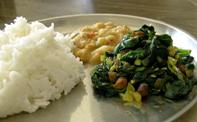
Ingredients:
2 Lb - Trimmed fresh spinach
2/3 Cups - Raw almonds and Cashews
2 Cups - Warm water
1 Tsp - Black mustard seeds
½ Tsp - Whole cumin seeds
¼ - Fenugreek seeds
1 Tbsp - Raw sugar/Jaggery
½ Tb - Grated ginger
1 or 2 - Red chilies
1/3 Cups - Shredded coconut
¼ Tsp - Nutmeg powder
3 Tbsp – Oil/Ghee
Salt and turmeric to taste
Method:
· Soak nuts in warm water for 4 hours or overnight. Drain, wash and drain again.
· Cu to pieces, toast and keep ready.
· Heat oil/ghee in a large pot over moderate heat.
· When hot, but not smoking, add the spice seeds and brown/raw sugar.
· Fry till the seeds darken & the sugar caramelizes.
· Add the ginger, chilies, spinach, nuts and salt.
· Cover, reduce heat to low & cook for 10 minutes.
· Uncover, gently turn the spinach over.
· Add water if necessary.
· Add coconut and cook for a further 10 minutes.
· Stir in the nutmeg & heat through for 1 to 2 minutes.
· Garnish with lemon & serve.
·
Serve warm
and tastes well with chapattis
or warm basmati rice
Nikhuti Payesh

Ingredients:
1
Lb - Cottage cheese (paneer)
4
Cups - Whole Milk
6 ½
Cups - Sugar
7/8
Cup - Refined flour
2-3
pods - Black cardamom *
2
-3 - Cinnamon *
2-3
- Jaitri (mace) *
Ghee/Oil
for frying,
*
Powder these and keep ready
Method:
· Kneed properly cheese, flour, cardamom and a spoon of ghee together.
· Make small elongated balls out of the mixture.
· Boil ghee/oil and fry the balls till golden brown. (nikhuties)
· Boil milk separately adding mace and cinnamon till it condenses.
· Make syrup boiling sugar in water. Keep the nikhuties in the syrup for 2 hours.
· Remove the balls with a strainer and dip in boiled milk.
· Serve after cooling.
Courtesy: BengaliNet
Enjoy the recipes! Keep it simple!
Kep it Authentic! Keep it Indian!
 Kitchen Tip – Untie bunches, remove any
blemished leaves, trim off the stems, and wash it thoroughly in cold water.
Repeat if necessary until you're sure all the grit is gone. Spin dry in a salad
spinner or drain well, and then put into clean plastic bags very loosely
wrapped with paper towels. It will last only two to three days, so plan on
eating your rinsed spinach right away. Cold, moist surroundings, as low as 32°F
and about 95% humidity are the best for storing spinach.
Kitchen Tip – Untie bunches, remove any
blemished leaves, trim off the stems, and wash it thoroughly in cold water.
Repeat if necessary until you're sure all the grit is gone. Spin dry in a salad
spinner or drain well, and then put into clean plastic bags very loosely
wrapped with paper towels. It will last only two to three days, so plan on
eating your rinsed spinach right away. Cold, moist surroundings, as low as 32°F
and about 95% humidity are the best for storing spinach.
Submit feedback to newsletter@mahaganapati.org with subject line as <Recipe> Disclaimer: Views of readers/column
writers are that of their own and not of the
