Vageesh Express

Deity of the Month – Mahavishnu


‘Maha Vishnu’ means ‘The Great
Omnipresent One’. He is present
in anything and everything. He is
anywhere and everywhere. Amongst the
Hindu Trinity, he is the protector of all beings in the universe. By repeating
his name ‘Om Namo Narayanaya’ all the sins we have committed in all our births are
dissolved. He bestows eternal bliss on all
who truly pray to him.
Vishnu is described as being dark blue in color. He is ever smiling, has captivating eyes, holds a conch in one
hand, disc (chakra) in other hand, mace (gathai) in the third hand. His right hand has the varatha mudhrai (
pose of giving) or holds a lotus flower.
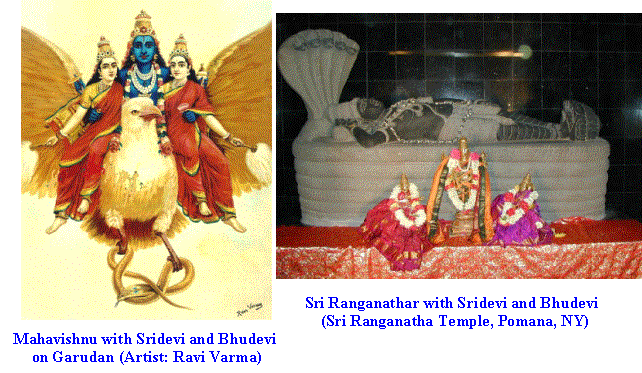
He has Sridevi (Lakshmi) and Bhudevi (mother earth) as his
consorts. Sridevi and Bhudevi bless us
with food, shelter and wealth.
Vishnu is also depicted as lying on the great snake Adhi Seshan in
Thiruparkadal (ocean of milk) with Lakshmi in his heart and Bhudevi lovingly
holding his legs. Brahma is seen on a
lotus emerging from Vishnu’s navel.
Vishnu as a protector of devas and humans, is associated with annihilating
the evil asuras and rakshasas. He
usually comes to the aid of Devas when they encounter difficulies at the hands
of the asuras. He devises ways and
means to destroy the evil-doing asuras.
His ten avathars are examples of this noble deed.
It is believed that at the end of the universe (Maha Pralayam), everything
will vanish and will be drowned in the great deluge. Vishnu will float in the form of a child in a banyan leaf. This is depicted in many pictures as Aalilai
Kannan (Krishna on banyan tree leaf) form.
 Many
saints have sung His praise. To name a few, we have the twelve Alwars including
Andal, Meera, Dhyaneshwar, Tukaram, Namdev, Srimanta Sankaradeva and Tulsidas. There are numerous devotional songs and
spiritual literature on Mahavishnu like Nalayira Divyaprbhandam by Alwars,
Spiritual treatise on Vaishnavism by Ramanujar and Madhwachariar, Vishnu Puranam,
Garudapuranam, Markandeya Puranam, and the famous Bhagavad Githa. Ramayana and Mahabharata, known to all Hindus are about the avatars of
Vishnu.
Many
saints have sung His praise. To name a few, we have the twelve Alwars including
Andal, Meera, Dhyaneshwar, Tukaram, Namdev, Srimanta Sankaradeva and Tulsidas. There are numerous devotional songs and
spiritual literature on Mahavishnu like Nalayira Divyaprbhandam by Alwars,
Spiritual treatise on Vaishnavism by Ramanujar and Madhwachariar, Vishnu Puranam,
Garudapuranam, Markandeya Puranam, and the famous Bhagavad Githa. Ramayana and Mahabharata, known to all Hindus are about the avatars of
Vishnu.
Vishnu can be pleased with true bhakti (devotion) rather than penance,
austerities or rituals. His devotees
find solace and joy in thinking about him more than the riches of heaven. Thondar Adippodi Alwar has expressed in one
his poems:
“I will not wish the taste of ruling the Indra Lokam
(heaven) than the (divine) taste that I get by visualizing your great green
mountain of a presence with lips like
coral, lotus eyes and praising you as Achyutha, Bull of a God and bud of the
cowherds.”
In addition, Andal’s and Meera’s devotional songs assuming Vishnu (Krishna)
as their lover and losing themselves to
Vishnu in body and soul.is the purest form of devotion.
Vaishnavism or, worship of Vishnu as the Supreme One is one of the major
sects of Hinduism. Most of his devotees
either follow ‘Dwaidam’ of Madhvacharya or ‘Vishishadwaitham’ of Sri Ramanujar. Although these two sects differ slightly in
their approach, both accept that Mahavishnu is the Paramathma and the rest as
Jeevathmas. In addition, they also
accept that Jeevathma and Paramathma are different.
Vishnu has temples all over India from north in Himalayas to South. Some of his famous temples are Badrinath,
Badrachalam, Srirangam, Tirupathi, Srivilliputhur, Puri, Pandaripuram, and
Kanchipuram. In the USA, Sri Venkateswara temple in Pittsburg, PA is
well known. In addition, there are temples
dedicated to Him in Bridgewater, NJ, Chicago, IL, and Malibu, CA.
Major religious festivals for Vishnu are Vaikunda Ekadasi, Gokulashtami,
Sri Rama Navami, Deepawali, Holi, etc.
Let us worship the lotus feet of Vishnu with true devotion and pray for
spiritual and material wealth.
Submit feedback to newsletter@mahaganapati.org with subject line as <Deity Of The Month> Disclaimer: Views of readers/column writers are that
of their own and not of the Temple
